
.png&w=3840&q=75&dpl=dpl_52gZPYUxXqMcsbK3MvN3Ajc7And4)
Blogs/Desert Sound
Planning Power for a Home Cinema in Pakistan: Load-Shedding, Voltage and Surges
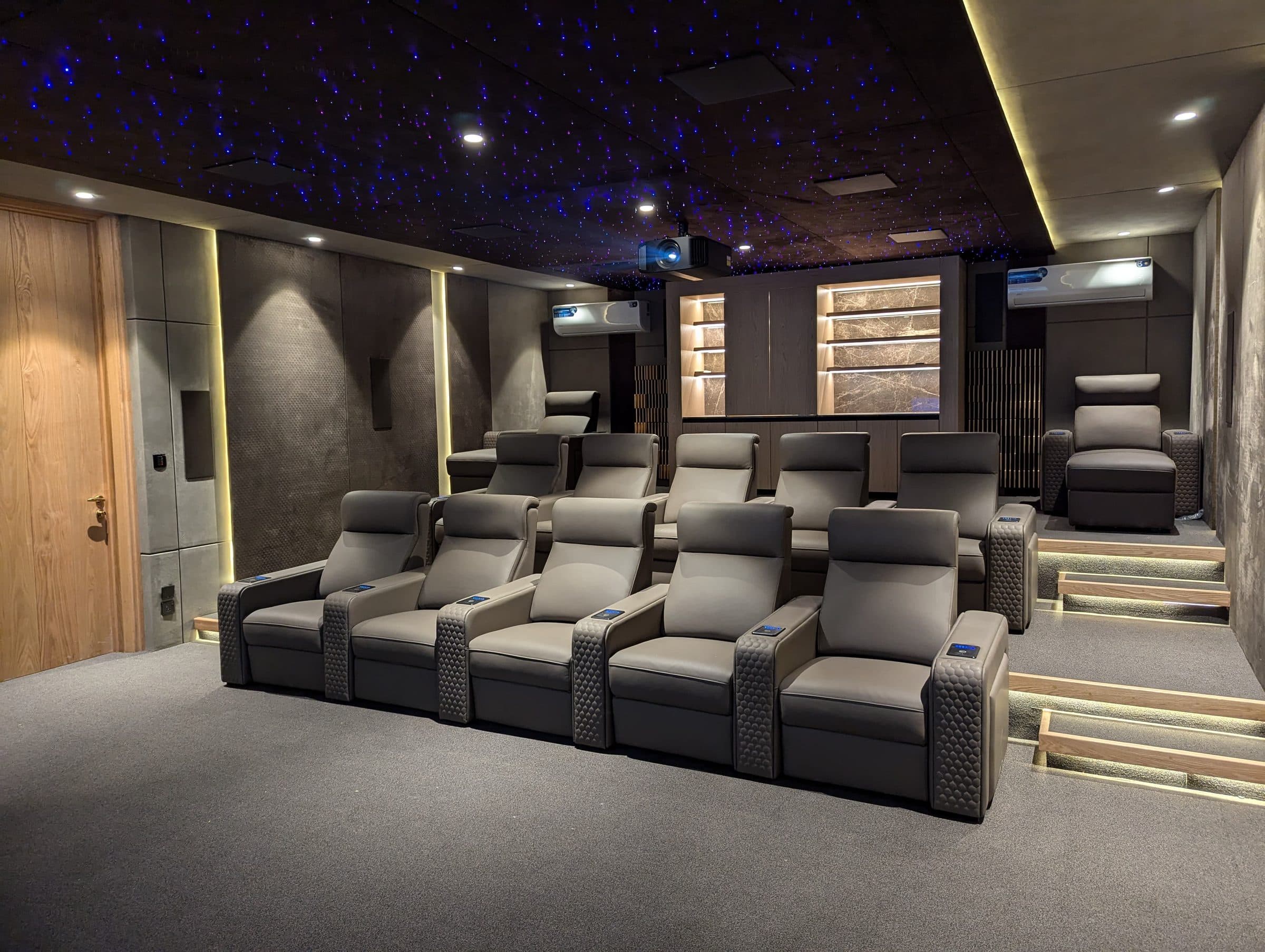
In a Pakistani home cinema, power is part of the design, not an accessory bought after the screen goes up. Load-shedding, voltage that drifts high or low, and short surges all reach the projector, processor and amplifiers, and each needs a different answer. This guide, written for homeowners and the electricians, architects and designers working with them, covers what each device does, what to settle before the walls close, and what to raise on the site visit.
Why Power Is a Design Decision in a Pakistani Cinema Room
Outages, unstable voltage and surges are three separate problems, and no single box solves all of them. A room that cuts out mid-film has failed, however good the screen and speakers are.
Load-shedding is the obvious one, and how often it hits depends on your feeder, so neighbouring areas can have very different schedules. Voltage is quieter trouble: supply that sags at the evening peak or rises late at night is easy to miss until equipment misbehaves. Surges are the shortest of all, a spike when the grid returns, when a large motor starts, or when a backup source changes over.
So power gets planned with the room, at the same stage as the screen wall and the seating.
Stabilizer, Voltage Protector, UPS and Surge Protection: What Each One Does
A stabilizer corrects voltage that drifts, a voltage protector disconnects when voltage leaves a safe range, a UPS keeps equipment running from a battery, and surge protection diverts very short spikes. None of them does another's job, which is why many rooms end up with a combination.
- Stabilizer: evens out high or low voltage. It does nothing when the power goes.
- Voltage protector: cuts the supply when voltage leaves a safe band and reconnects once it returns. It protects but does not correct.
- UPS: runs equipment from a battery through a cut or deep dip, for as long as its sizing allows.
- Surge protection: diverts spikes lasting a fraction of a second. It does not help with low voltage or outages.
UPS units come in three broad designs. A standby (offline) unit passes mains power straight through and switches to battery when it fails. A line-interactive unit also corrects moderate voltage swings before it needs the battery. An online (double-conversion) unit rebuilds its output continuously, so in normal operation the equipment does not see the mains directly.
Surge protection is planned in layers: one device at the main distribution board, and another close to the sensitive equipment, chosen to work together.
The useful question is which loads truly need battery: usually the projector or display, processor or receiver, source player and network. Subwoofer amplifiers and other heavy loads are a sizing conversation with whoever supplies the backup, not a default.
Plan the Circuit Before the Walls Close
The cheapest time to plan power is before plaster, gypsum and panelling go up. Conduit, outlet positions and the run to the equipment are simple on a bare wall and expensive after.
Topics to settle with your electrician at that stage:
- A circuit for the cinema equipment. Water pumps and non-inverter ACs draw a short surge several times their running current when they start, one reason to keep cinema equipment on its own circuit.
- An outlet at the projector position, on the ceiling or rear wall, fed from the same planned supply as the rest of the system, so the projector is not left off the backup.
- A route for the backup output to reach the equipment location, if the UPS or inverter will sit in another room.
- Access to the distribution board and the backup for future maintenance.
These are decisions for a qualified electrician. The cinema plan tells them where the equipment and projector will be.
Where the Equipment and UPS Sit, and the Heat Their Batteries Add
A UPS and its batteries need a spot with good airflow that you can still reach. Battery life falls quickly as batteries run hotter, and that matters in a Karachi summer.
UPS makers point out that the battery inside a UPS can run warmer than the room around it, and they recommend installing the unit somewhere with good airflow and proper ventilation. So keep the UPS and its batteries out of sealed joinery. Batteries need replacing eventually, so leave a way in that does not mean dismantling the room. Where possible, keep power equipment in a ventilated space beside or behind the room, not among the seats.
Hiding equipment is part of the finish in any cinema room. In Project Platinum, the projector, speakers and cabling sit where they belong, so the room stays composed and the wiring does not show.
Plan the backup with the same intent: out of sight, but never sealed in.
Inverters, Solar and Generator Changeover
Inverters, hybrid solar systems and generators can all keep a cinema room running, but the quality of their output and the changeover between sources both need planning. Check the output waveform and the isolation from the grid.
Many modern electronics use active-PFC power supplies. UPS makers warn that these can shut down on the stepped, simulated sine wave that entry-level units produce, so choose backup with a pure sine-wave output for the cinema loads.
A generator should connect through a changeover switch fitted by a qualified electrician, which keeps it isolated from the grid. Generator makers warn that without that isolation, power can feed back into the utility lines, risking injury or death to utility workers and damage to the generator.
Switching between grid, inverter, solar and generator can also disturb the supply for a moment. Layered surge protection and a projector on backed-up power cover that moment.
Earthing: The Part Nobody Sees
Surge protection is only as good as the earthing behind it. Surge protectors work by sending the surge to earth, so they depend on a sound, short connection to the earthing system.
Earthing should be tested by an electrician, not assumed, especially in older or extended houses. It also protects people from electric shock, not only equipment. If the earth is doubtful, fix it before relying on any surge protector.
Let the Projector Cool Down Before the Power Goes
Many lamp projectors keep a fan running after switch-off, and their manuals say to wait until the cool-down finishes before cutting the power. Some newer models skip the cool-down entirely, so check your own manual.
That is why the projector belongs on the backed-up supply: a load-shedding cut should not end a cool-down early. Switch off from the remote and let the fan stop on its own; our guide to preventing home theater overheating covers the rest of the projector's heat.
What to Raise on the Site Visit
Bring three things to the survey: your outage pattern, the backup you already have, and your electrician's contact. Power backup is discussed on the site visit, alongside the room, light and seating.
If you already run a UPS, inverter, solar system or generator, note what it powers today and where it sits. The rest of the room, from layout to concealment to calibration, is covered under home theatre design and installation, and this overview explains what a cinema installer in Pakistan actually does. When you are ready, book a site visit. Visits run across Pakistan.
Frequently asked questions
Do I need a UPS or a stabilizer for my home theater in Pakistan?
They do different jobs. A stabilizer corrects voltage that drifts, a UPS keeps the system running through a power cut, and surge protection diverts very short spikes. Many cinema rooms need a combination, depending on the outage pattern and the quality of supply at the house.
Is it safe to let load-shedding switch off my projector?
It is better avoided. Many lamp projectors run a cooling fan after switch-off, and their manuals say to let it finish before the power is cut. Keep the projector on backed-up power, switch off from the remote first, and check your model's manual.
Should the home cinema have its own electrical circuit?
It is worth planning with your electrician before finishes close. Water pumps and non-inverter ACs draw a short surge several times their running current when they start, so keeping the cinema equipment on its own circuit, away from those loads, is a sensible choice.
Can I run my home cinema on solar or an inverter?
Often, yes, if the backup is sized for the cinema loads, gives a pure sine-wave output for equipment with active-PFC power supplies, and a qualified electrician handles the changeover between sources so the system stays isolated from the grid.
Continue exploring
Contact
Ready to plan the room?
+92 21 111 570 111 · info@desertsound.com.pk
22-C/II, 2nd Zamzama Commercial Lane, Phase V, DHA Karachi
Get in touch