
.png&w=3840&q=75)
Blogs/Desert Sound
Home Cinema in Pakistan: What a Cinema Installer Actually Does
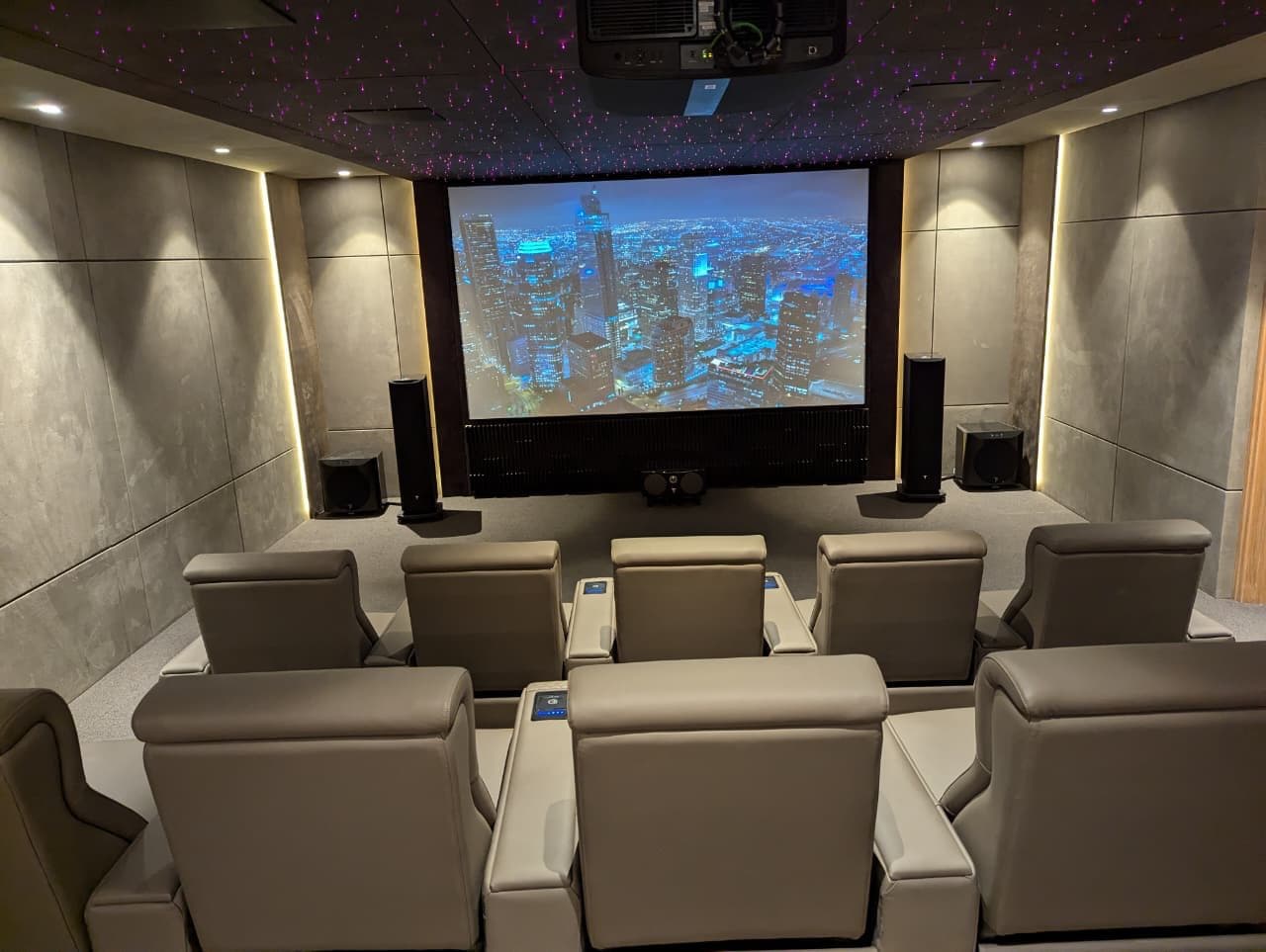
People searching home cinema Pakistan are rarely looking for a boxed theater in a mall. They want a room that plays like a cinema: picture sized to the seats, dialogue that stays clear, cables that do not show, and one way to start the film. That is an install. The person you hire is a cinema installer, not a counter that hands you a carton.
Desert Sound’s home theatre design and installation work follows one sequence across Pakistan: design the room, install into the building, then calibrate picture and sound to those seats. Karachi is the city we survey every week — the finished residential theatres live there. Lahore, Islamabad, and other cities get the same process on a site visit, not a different product.
Home cinema is a room, not a shopping list
A television and a soundbar can fill an evening. A home cinema is a layout decision. Screen size follows viewing distance. Speakers follow the seats, not the furniture plan. Light, heat, and power in a Pakistani house veto a lot of showroom diagrams before the first box is ordered.
That is why “systems” pages that lead with a brand stack miss the brief. The room already exists: west-facing glass in a Karachi apartment, a spare bedroom that can close a door, a villa basement that can take two rows. Until those facts are measured, buying kit is guesswork you will pay to undo.
A dedicated room can go darker and louder. Emerald Private Cinema is that Karachi version — acoustic detailing, stepped recliner rows, hidden wiring, and picture and sound calibrated after the envelope is finished. A shared lounge still needs the same rules; it just cannot take the same image or the same bass.
What to look for in a cinema installer in Pakistan
The best cinema installer is the one who can walk you through a finished room like yours, then tell you what your room cannot do. Photos of concealed cable, a seating line that actually sees the screen, and a rack that can breathe count. A showroom wall of cartons does not.
Ask what they do before the walls close, and what they do after the first film. Design should name screen height, speaker layout, and a cable path. Install should name concealment, power, and ventilation. Calibration should name measurement at the main seat — not a preset left on from the factory.
Walk away from a quote that is only a gear list. If they cannot say where the centre speaker sits, why the sub is not in that corner, or how the projector survives a May afternoon in a closed niche, they are selling boxes. Desert Sound would rather survey first and specify second. That is the difference between a cinema and a weekend of returns.
Proof is local. We finish rooms in Karachi and take that method on the road. You should be able to see the work, not a catalogue mood board.
Design: the room decides the theater
Start with how the house is used. News and cricket in a living room is a different job from two films a week behind a door. Guests, children, and a sofa that still has to face conversation change speaker height, screen size, and how much bass the next room will tolerate.
Lock the seats first. Then the screen. Then the speakers. Reverse that and you will move a display twice. Studio Vellari is the flagship Karachi example of that order: Stanley recliners and a daybed specified with the install, acoustics and the screen wall designed around them, then the room calibrated as one cinema rather than furniture dropped in front of a panel.
Display follows light and throw, not the largest panel in the shop. A bright lounge usually wants a large television. A darker, deeper room can take a projector and a 100-inch-plus image if blackout is honest. Heat is part of the design: a closed TV niche and a Karachi summer will cook a receiver. Vent the rack, or do not put the AVR in a cabinet.
Speaker layout follows what the building can finish. A 5.1 (or more) is the real theatre — centre for dialogue, surrounds beside the seats, a sub that is measured. In-walls need open walls or a construction visit. Towers need floor space. Apartments have neighbours. Villas still need a cable path. Object-based layouts such as Atmos only help if height speakers can actually sit above you.
Install: hide the work before the walls close
Installation is the unglamorous half, and it is where cheap quotes fail. Speaker cable, HDMI, and spare conduit belong in the wall, floor, or trunking before paint. Tape across a marble threshold is not an install. Closing gypsum with no path is how a later upgrade becomes a rebuild.
Power is part of the brief in Pakistan. Load-shedding and voltage swings hard-shut projectors and receivers. Put the theatre on a UPS or inverter and a conditioner at the rack. Dedicated circuits beat a shared kitchen ring. Dust and heat need a ventilated space, not a pretty cupboard with no airflow.
Concealment is a design finish, not a tidy-up. Project Platinum is a Karachi cinema where the projector, speakers, and cabling sit where they belong — two recliner rows, a star ceiling, equipment discreet enough that the room still feels composed. That is install quality you can see without opening a rack.
In a finished Clifton or Bahria apartment, the honest survey names what you can hide without opening marble: surface trunking, furniture routing, or a compact layout. In a house still being built, pull cable now even if the speakers come later. The installer who shows up after the painter has left is already late.
Calibrate: first picture is not the finish
An uncalibrated room plays the showroom preset. Colours run cool, dialogue sits under the effects, and one seat gets all the bass. Calibration matches picture and speakers to the seats you locked in design — levels, distances, EQ, brightness against the actual light.
That pass belongs in the install, not as a favour six weeks later. Cinema or movie picture modes are a starting point. Measurement at the main row is the finish. If you have two rows, the rear has to see the screen; Stanley Seats is a Karachi seating install built around Stanley recliners so comfort, circulation, and sightlines are set before picture and sound are tuned to them.
A one-button start is part of calibration in a house several people use. Four remotes on the sofa means the room is not handed over. Lights, playback, and volume should meet on one scene when you sit down. Support after that — a setting that drifts, a speaker that fails — is why you hire an installer who stays reachable, not a one-day crew.
Dedicated cinema or a room you still live in
Not every brief is a sealed theatre. Some houses want the cinema feel without losing a sitting room. Residency Private Cinema is that Karachi install: a large-format screen and acoustic walls, but recliners and a sofa in a layout people still use when the film is over. The process does not change — hidden wiring, acoustic control, calibrated picture and sound — the envelope does.
Choose by the week, not the brochure. If you can close a door, you can take a darker picture and a fuller surround layout. If the room stays a lounge by day, plan a setup that can disappear: wall-mounted display, compact or in-wall speakers, cables in the wall. Both are home cinema work. One is not a failed version of the other.
Karachi apartments and Lahore houses fail for the same reason when they skip the survey: gear chosen for a showroom, then forced into the room. Islamabad villas with glass and stone fail the same way if treatment and bass are an afterthought. The city changes the light and the neighbours. The sequence does not.
Across Pakistan, from Karachi
Desert Sound installs home cinema rooms across Pakistan, from Karachi. The residential cases you can visit or study in detail are Karachi rooms, because that is where we finish work week after week. A project in another city still starts with a site visit, a layout for that building, and the same design–install–calibrate path.
Do not hire on a national claim with no local rooms. Do not hire on a shop floor. Ask for a survey, a written scope that includes concealment and calibration, and finished theatres that match the brief.
If the room is still a drawing, call before the walls close. If it is already painted, call before you buy the screen. Talk to Desert Sound and we will tell you what the space can actually support — then install it as a home theatre, not a pile of boxes.
Continue exploring
Contact
Ready to plan the room?
+92 21 111 570 111 · info@desertsound.com.pk
22-C/II, 2nd Zamzama Commercial Lane, Phase V, DHA Karachi
Get in touch