
.png&w=1920&q=75)
Blogs/Desert Sound
What Screen Size Works Best for Home Theater Design
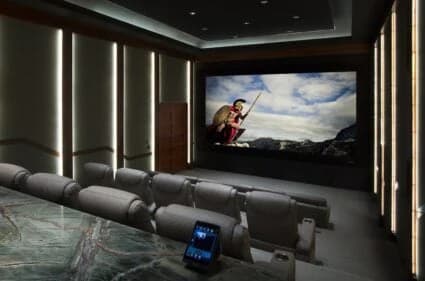
The biggest screen is not always the right one. Too large and you scan left to right and the image can look soft; too small and it still feels like a TV. Size has to match seating distance, wall width, and how much light the projector can put on the cloth.
The 1.5x Distance Rule
Multiply the screen's width by 1.5 to get a workable seating distance. An 8-foot-wide image wants the main seat around 12 feet out. If you can only sit 9 feet from the wall, drop the width to about 6 feet. That's the rule we use on Pakistani home theatre jobs when we need a first number before we fine-tune for the room.
Match Size to the Room
Measure wall width and height before you buy. The building sets the maximum, not the brochure.
Small Rooms (10 × 12 Feet)
A spare bedroom or tight lounge can't take a wall-filling frame. A 100–110 inch screen fills the view without crowding the front speakers on either side.
Medium Rooms (12 × 18 Feet)
Common in Pakistani houses. 120–135 inches works for more than one row without forcing people to sit in the first wave of the image.
Large Rooms (15 × 20 Feet or More)
150–180 inches is realistic if you have the throw, the brightness, and a riser so the back row can see. Without the riser, a huge screen is just a bigger obstacle.
Aspect Ratio
- 16:9 — sports, games, streaming. Standard TV shape. Use this if that's most of the hours.
- 2.35:1 — cinema widescreen. Films fill it; regular TV shows black bars on the sides. Spec it if the room is meant to feel like a commercial house, and accept the bars on series nights.
Ceiling Height and Speakers
Most homes here have 9–10 foot ceilings. Don't run the image into the slab or drop it onto the floor. Keep the bottom of the screen 2–3 feet off the floor so the front row doesn't block the row behind.
Leave space left and right for the front speakers. A screen that runs corner to corner leaves nowhere for them unless you use an acoustically transparent cloth and put the speakers behind it.
Brightness vs Size
The same projector on a 160-inch screen looks dimmer than on 100 inches — the light is spread thinner. On 100 inches it can look bright and sharp; stretched further it goes dull. A larger image needs a brighter projector, not just a bigger frame.
Motorized Screens and Scenes
A drop-down screen keeps the wall clear when you're not watching. With a smart home automation system in Pakistan, play can lower the screen from a ceiling pocket, wake the media centre, close shades, and dim lights in one scene.
The Frame
A black velvet border kills spill and makes colour look tighter, the way a commercial cinema frames the picture. Allow an extra 2–3 inches of wall for that frame so it doesn't get cut off.
Measure the wall, apply the 1.5x rule, leave room for speakers, and check projector brightness before you lock the size. If you want that checked on site, contact us.
Continue exploring
Contact
Ready to plan the room?
+92 21 111 570 111 · info@desertsound.com.pk
22-C/II, 2nd Zamzama Commercial Lane, Phase V, DHA Karachi
Get in touch