
.png&w=1920&q=75)
Blogs/Desert Sound
Tips for Calibrating Subwoofers for Deep, Crisp Bass Without Distortion
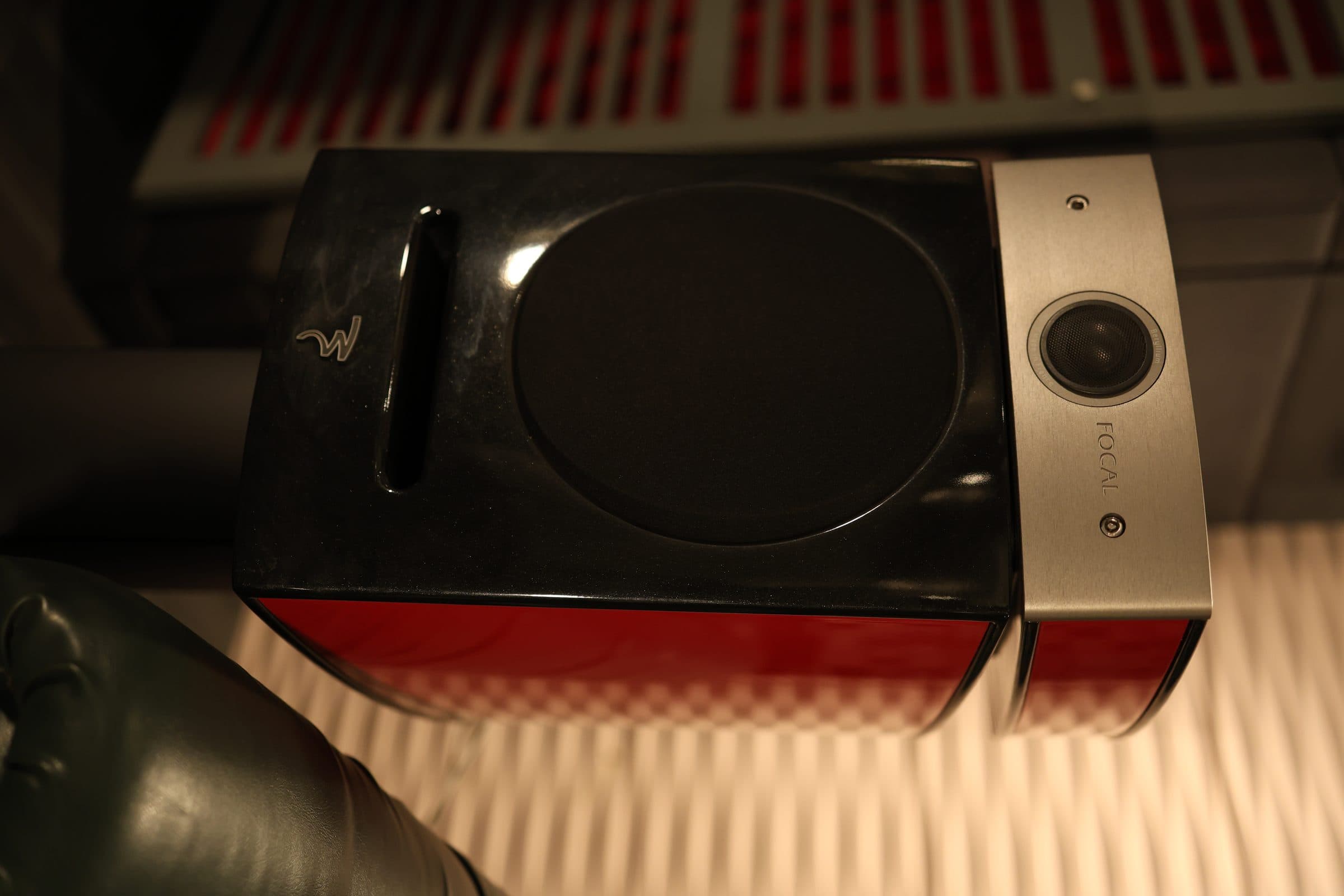
Low frequencies are long waves. They interact with the room more than any other part of the system. High frequencies travel in a narrow beam; bass fills the space and piles up in corners. A capable subwoofer placed or gained wrong will boom, cancel notes, or distort on peaks. Calibration is what blends it with the mains so the low end is strong and still readable.
Placement First
Don't park the sub where it fits. Placement decides which notes get loud and which disappear. One seat can feel chesty while the next is hollow — that's the room, not a broken driver.
The Subwoofer Crawl
Put the subwoofer on the main seat, at ear height. Play a track with a steady, unbroken bass line and walk the perimeter, listening near walls where the cabinet could actually sit. Listen at floor level as you move. You're looking for tight, even bass — not a bounce or a hole. Move the sub to that spot, then sit back down. This also helps reduce sound echoes that smear the low end.
Corners vs Open Wall
A corner boosts output (corner loading) because two walls reinforce the wave. Useful if you need more level; it also excites room modes and can sound one-note. A front or side wall, 6–12 inches off the surface, usually sounds smoother and leaves rear ports room to breathe. Don't jam a ported cabinet tight to drywall.
Set the Controls Before Auto-Cal
Most powered subs have rear-panel knobs for gain, crossover, and phase. Set those by hand before you run the receiver's room correction. Auto-cal on a badly gained sub just writes a bad filter.
Gain
Don't crank the physical gain. High gain overloads the internal amp on peaks, adds port noise, and can bottom the driver. Set the knob around 12 o'clock — roughly half power — and let the AV receiver or processor handle system level. The sub amp stays cooler and inside its linear range.
Crossover
This is where the mains hand bass to the sub:
- Bookshelf speakers: 80 Hz, the usual integration point
- Compact satellites: 100–120 Hz, so small cones aren't asked to play bass
- Large floor-standers: 60 Hz, or a bit lower, so the towers keep the upper bass
Set the sub's own crossover knob to maximum or LFE. That bypasses the internal filter so the receiver's digital crossover isn't stacked on a second analog one.
Phase and Delay
If the sub and mains are out of phase at the crossover, the waves cancel and bass goes thin. From the seat, have someone flip the 0/180 phase switch. Keep the setting that sounds fuller and more solid, not just louder in one note.
Then enter real tape-measure distances from the seat to each speaker and sub in the receiver. Those numbers become millisecond delays so arrivals line up. A smart home automation scene can store the setup once it's right.
Room Correction
After placement, gain, crossover, and phase are set, run the built-in calibration. The mic measures sweeps and the receiver writes EQ to flatten peaks and dips.
Put the mic on a tripod at ear height, and take readings across seats — don't hold it. Body movement skews the data. After the sweep, open speaker sizes and set them to Small so bass routes to the sub instead of straining the mains.
Keep It Clean
Check that the sub cable is seated and quiet. Wipe cones and rubber surrounds with a dry microfiber cloth so grit doesn't sit on the suspension. Don't clip the sub for a whole film marathon; sustained clipping heats voice coils and ages the driver.
We measure this as part of home theatre design and installation when you want the room, not the guess, to set the bass.
Continue exploring
Contact
Ready to plan the room?
+92 21 111 570 111 · info@desertsound.com.pk
22-C/II, 2nd Zamzama Commercial Lane, Phase V, DHA Karachi
Get in touch