
.png&w=1920&q=75)
Blogs/Desert Sound
The Real Benefits of Using Underfloor Audio Distribution in Modern Homes
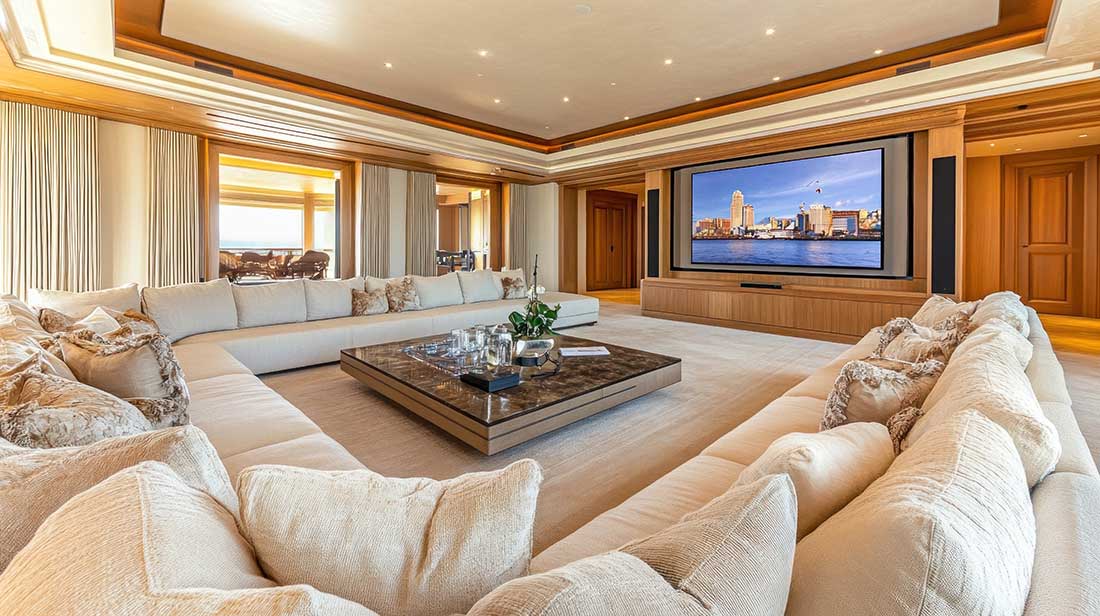
Most rooms end up with boxes on the floor, black rectangles on the wall, or speaker cable along the skirting. Underfloor audio puts low-profile transducers under the finished boards and uses the structure to spread sound. The floor becomes the radiator. Lighting and paint still get the design hours; the audio just stops fighting them.
The Room Stays Clear
Modern interiors want clear lines and empty floor. Towers, flashing rack lights, and a loom of cable undo that in a day. Move the system under the boards and there's nothing to walk around. A control system still runs volume and sources; the hardware just isn't in the furniture plan. Sofas can sit where the room wants them. No plasterboard ceiling cans, no cabinets eating square metres.
Even Coverage
A pair of speakers by the TV is a single source: loud up close, thin in the kitchen, dead in the doorway. Structural transducers bolt to the underside of the subfloor and send controlled vibration through engineered wood or similar. The surface radiates upward as a wide, even field. Volume stays consistent from the sofa to the window — useful in an open-plan home theater design or living space. Hot spots and holes go away because the emitter is the floor, not a box in the corner.
Bass You Feel, Not Just Hear
In a hall or a commercial cinema you feel low notes in the chest, not only in the ears. A box subwoofer tries to do that by moving air, and in a house it often shakes the next room or the floor above. Coupled to the structure, bass travels through the boards and furniture as a precise vibration underfoot. An explosion or a bass note is felt without turning the volume up until the walls complain.
Heating Can Share the Floor
Solid-state transducers don't have cones that hate heat. Modern audio distribution systems are built to sit alongside hydronic or electric underfloor heating. Dense engineered hardwood, thick laminate, and acoustic subfloor board carry both warmth and vibration, so the two systems can run together if the layout is planned before the floor goes down. Warm boards and even music at the same time — that's the brief, not a conflict.
You lose the visible boxes and the cable, and you gain a field that doesn't drop when you walk. Tactile bass and shared heating are available if the floor is specified before it closes. This only works if the build-up is designed for it. Contact us if you're specifying the floor and the audio at the same time.
Continue exploring
Contact
Ready to plan the room?
+92 21 111 570 111 · info@desertsound.com.pk
22-C/II, 2nd Zamzama Commercial Lane, Phase V, DHA Karachi
Get in touch