
.png&w=1920&q=75)
Blogs/Desert Sound
Reasons to Invest in Professional Home Theatre Design and Installation
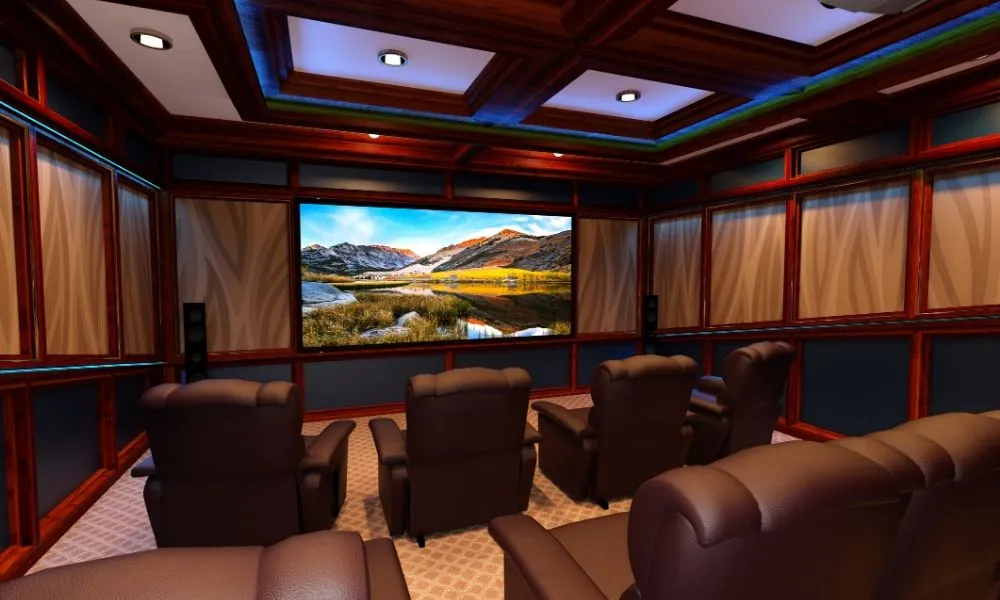
A projector and a TV in the living room is not a plan. Professional design starts with the room — where sound reflects, how far the seats sit from the screen, and how cables get hidden before the walls close.
Sound That Matches the Room
Speakers do not go in corners because the furniture looks tidy. Placement follows the seats and the first-reflection points. Dialogue stays clear; bass does not boom into the next room.
Most DIY setups fail here: loud, muffled, or both. Action should have weight without burying speech. Music should sit in the room, not smear off tile and glass. That comes from angles, distances, and a receiver sized for the space — not from turning the volume up.
A Screen Sized for the Seats
Screen size follows viewing distance, not the biggest panel in the shop. Height and angle are set so nobody squints or cranes. A small TV in a large room looks like an afterthought. A huge screen in a tight room is just as wrong.
Professionals also set brightness and placement against the actual light: west-facing glass in a Karachi apartment, a chandelier that cannot dim, a window behind the seats. Glare is a design problem, not a “buy a brighter TV” problem.
Built Around the House
Karachi rooms are rarely empty boxes. Windows, columns, and existing furniture get planned around. The system should look like it belongs, not like a rack parked in the lounge.
A spare bedroom, a basement, or a living-room wall can all work. The layout changes; the rules do not: one main seat on axis, speakers that can actually see that seat, and a rack that can breathe.
Hidden Wiring
Cables run in walls, floors, or trunking. Tape and floor runs fail, trip people, and look unfinished. Doing this after paint is the expensive version of the same job.
HDMI lengths, speaker gauge, and power for the rack get decided before the first hole. Service loops stay accessible so a later swap does not mean opening the wall again.
Time and Support
A weekend of videos rarely finishes a cinema. Desert Sound designs, installs, and calibrates, then stays available when a setting drifts or a speaker fails.
Cheap DIY usually means redoing speaker placement or opening finished walls. Doing the room once costs less than fixing it twice. The house does not automatically become more valuable because a TV is on the wall. What you get is a room that works every night, and gear that is not fighting the space.
Need the room planned properly? See home theatre design and installation.
Continue exploring
Contact
Ready to plan the room?
+92 21 111 570 111 · info@desertsound.com.pk
22-C/II, 2nd Zamzama Commercial Lane, Phase V, DHA Karachi
Get in touch