
.png&w=1920&q=75)
Blogs/Desert Sound
Essential Checklist for Building a Custom Home Cinema in Pakistan
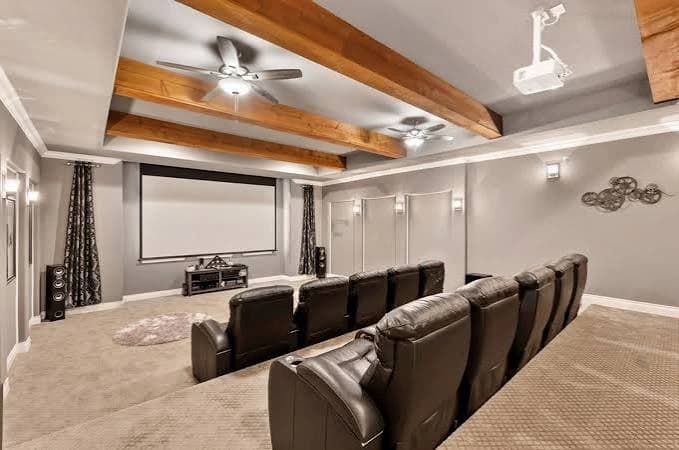
The room sets the ceiling for picture and sound. Dimensions, windows, and power matter as much as the projector. Skip those and the kit never performs.
Selecting the Room
A rectangle usually beats a square — square rooms stack bass in the middle and send reflections around in a mess. Prefer an interior room or basement with few windows so you're not fighting daylight. Ceilings around 9–10 feet leave room for a seating riser and overhead speakers.
Soundproofing and Treatment
Treatment shapes sound in the room. Soundproofing keeps it from leaking to the next one. Brick and concrete bounce energy; the result is harsh echo and muddy dialogue. Smart home automation can run lighting scenes once the room is quiet enough to use them.
- Wall panels at first-reflection points on the side walls, fabric-wrapped
- Thick carpet and pad on tile, so the floor stops acting like a mirror
- Solid-core doors with rubber perimeter seals instead of hollow cores
Display
Match the display to throw distance, light, and budget. Home cinema displays are usually a large TV or a projector on a fixed frame.
Projectors work well at 100–150 inches and up in a dark, light-controlled room. Modern 4K laser units hold brightness and black level if the room cooperates. Ambient-light-rejection screens help if a little light still gets in. In a room under about 12 feet wide, an 85- or 98-inch OLED is often cleaner than forcing a short-throw projector.
Speakers
A 5.1 or 7.1 layout covers left, center, right, surrounds, and a sub. Object-based layouts such as 5.1.2 or 7.1.4 add ceiling speakers so effects — rain, a helicopter — move overhead instead of sitting in the front wall.
Put the center channel at ear height, just above or below the screen. That's the dialogue speaker; if it's wrong, the rest of the mix won't save it.
Power
Load shedding and voltage swings are part of planning in Pakistan. Laser projectors and receivers don't like sudden drops or spikes. Put the theatre circuit on a UPS or a dedicated inverter, and a conditioner at the rack, so a cut doesn't hard-shut the lamp mid-film.
Seating
If you have two rows, raise the rear 8–12 inches so heads don't become the screen. Leave 4–5 feet from the front row to the image. Recliners with cup holders and USB are fine; sightlines matter more than the upholstery.
Climate and Lighting
A sealed room with amplifiers and people heats up. Use a quiet inverter split, away from seats and mics so you don't hear the fan in quiet scenes. Scene lighting — movie, intermission, clean — should dim sconces and floor lights from one control when you press play.
Maintenance
Dust on lenses, vents, and grilles holds heat and dulls the picture. Clean projector filters every 3–6 months. Keep the rack in a ventilated space. A control system helps you power the rack down cleanly. Condition leather so it doesn't crack in dry air; wipe screens with a dry microfiber cloth, not chemical sprays.
We build from this list on every home theatre design and installation — room first, then the kit.
Continue exploring
Contact
Ready to plan the room?
+92 21 111 570 111 · info@desertsound.com.pk
22-C/II, 2nd Zamzama Commercial Lane, Phase V, DHA Karachi
Get in touch